
Porcelain vs Ceramic Tiles: Which One Should You Choose?
A technical, no-fluff breakdown of tile durability, water absorption, floor performance, and cost — so architects, designers, and serious homeowners can make the right call the first time.
Ask ten people which tile is "better" and you'll get ten different answers. The truth is, neither porcelain nor ceramic is universally superior — each has a specific role, and choosing the wrong one for a space is one of the most common (and most expensive) mistakes in residential and commercial projects. This comparison gives you the technical data to make the right decision without guesswork.
Jump to a Section
- What Actually Separates Porcelain from Ceramic?
- Water Absorption Rate: The Spec That Matters Most
- Tile Durability Comparison: Hardness, Scratch & Load
- Full Specification Comparison Table
- Which Tile for Which Room?
- Cost vs Lifespan: The Real ROI
- Recommended Brands at Future Designz
- Final Verdict
- Frequently Asked Questions
1. What Actually Separates Porcelain from Ceramic?
Both porcelain and ceramic tiles are made from clay, fired in a kiln, and belong to the same broad category of "ceramic tile." But the similarity largely ends there. The key difference lies in the clay composition and the firing temperature — both of which directly determine performance.
Ceramic tiles are made from a coarser clay blend, fired at lower temperatures. This makes them lighter, easier to cut, and generally more affordable — but also more porous and less dense.
Porcelain tiles are made from a more refined feldspar and kaolin clay mix, fired at much higher temperatures (typically 1,200–1,400°C). This produces a tile that is significantly denser, harder, and far less absorbent — which is why it outperforms ceramic in almost every functional category.
2. Water Absorption Rate: The Spec That Matters Most
Water absorption is not just a bathroom concern. In Pakistan's climate — with humid summers and temperature fluctuations between seasons — tiles with high absorption rates expand and contract at different rates from their adhesive layer. Over time this causes cracking, lippage, and grout failure, even in indoor applications.
At 0.5% or below, porcelain is classified as impervious — it doesn't absorb water in any meaningful sense. This means no staining, no frost damage, and no structural weakening from moisture over time. Ceramic at 3–7% is classified as semi-vitreous to vitreous, acceptable for interior dry or low-moisture applications, but a liability anywhere wet.
3. Tile Durability Comparison: Hardness, Scratch & Load
Tile hardness is measured on the Mohs scale (scratch resistance) and the PEI rating (Porcelain Enamel Institute — abrasion resistance for floor use). These two figures tell you which tile will still look presentable after five years of foot traffic.
4. Full Specification Comparison Table
| Specification | Porcelain Tile | Ceramic Tile |
|---|---|---|
| Water Absorption | ≤ 0.5% — Impervious | 3–7% — Semi/Vitreous |
| Mohs Hardness | 6 – 8 | 4 – 6 |
| PEI Floor Rating | IV – V (heavy traffic) | I – III (light–medium) |
| Breaking Strength | > 35 MPa | 15 – 25 MPa |
| Frost Resistance | Yes — outdoor safe | No — indoor only |
| Stain Resistance | Excellent (Class 5) | Good with glaze; grout vulnerable |
| Large Format Availability | 60×60, 80×80, 120×240cm slabs | Typically ≤ 60×60cm |
| Bookmatching / Slab Effect | Available in premium ranges | Rarely available |
| Ease of Cutting | Requires wet saw / pro tools | Easier — snap cutter works |
| Surface Variety | Matte, polished, textured, lappato | Wider decorative range; hand-painted |
| Weight | Heavier — may need structural check | Lighter — easier to handle |
| Cost (per sqft, imported) | Higher upfront cost | Lower upfront cost |
| Lifespan | 50–100 years with proper install | 15–30 years |
| Best Application | Floors, outdoors, wet areas, commercial | Interior walls, backsplashes, feature areas |

5. Which Tile for Which Room?
Living Room Floor
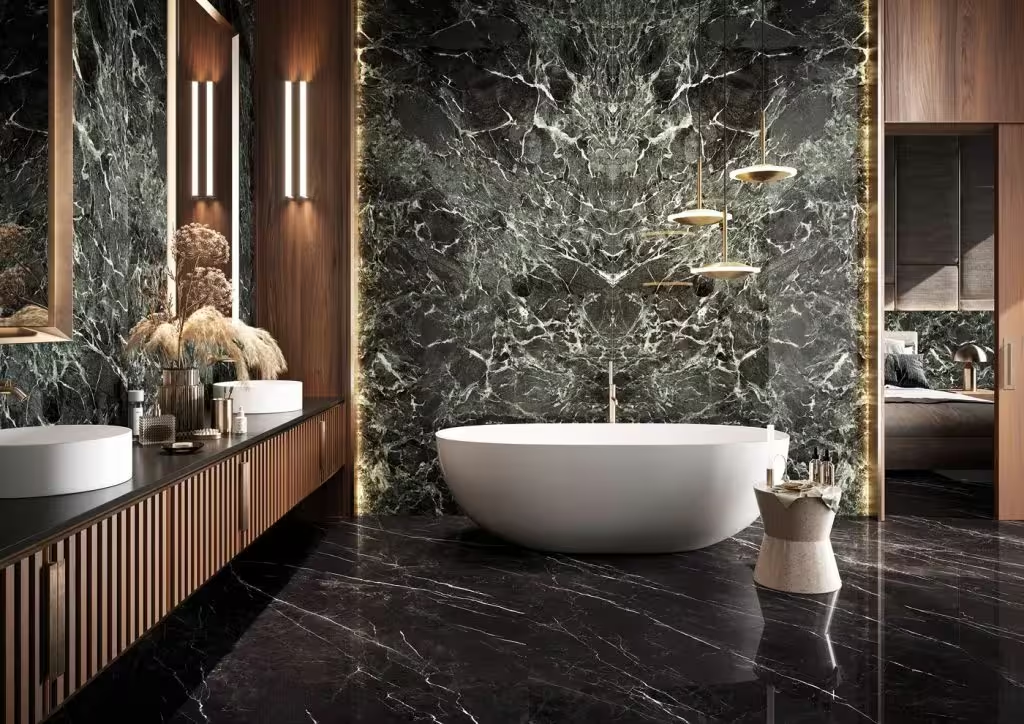
Large-format porcelain. High traffic, occasional spills, and the need for seamless visual continuity all point firmly to porcelain — especially in polished or lappato finishes for a luxury feel.
Bathroom Walls
Ceramic is ideal here. The design range is wider, hand-applied surface textures are available, and wall applications don't require the structural density that floor tiles demand.
Bathroom Floor
Porcelain only. Water absorption must be near-zero. Choose a matte or textured finish for slip resistance. Glossy porcelain works on walls, not wet floors.
Kitchen Backsplash
Ceramic is the natural choice — easier to cut around outlets and pipes, wide decorative options, and heat resistance is adequate for a wall surface behind a hob.
Outdoor / Driveway
Porcelain is non-negotiable. Ceramic will crack in outdoor temperature swings. You need frost-resistant, textured-surface porcelain rated for external use.
Commercial Spaces
Porcelain rated PEI IV or V. Offices, showrooms, hotels, and restaurants need abrasion resistance beyond what ceramic can reliably deliver over ten-plus years.
6. Cost vs Lifespan: The Real ROI
Ceramic tiles are always cheaper upfront. But cost-per-year of service life tells a different story. A quality imported porcelain floor installed correctly can last 50 to 100 years with zero structural degradation. Ceramic flooring in a high-traffic application typically shows wear within 10–15 years and may require full replacement within 20–30.
For interior feature walls and decorative backsplashes where traffic and moisture are not concerns, ceramic offers excellent value — often at a lower cost with a wider artistic range than porcelain.
7. Recommended Brands at Future Designz
Our imported collection covers both categories, so you can compare side-by-side in the showroom rather than guessing from a sample chip.
Porcelain Brands
Italian and Spanish porcelain from these collections includes large-format slabs, bookmatched marble-effect series, matte and lappato finishes, and PEI IV–V floor ratings. Ideal for floors, feature walls, outdoor applications, and commercial interiors.
Ceramic / Decorative Surface Brands
Dune and Pamesa are known for surface depth and artistic design that printed porcelain rarely matches — ideal for bathroom walls, kitchen feature areas, and any space where the tile itself is the design statement. See the full collection at our Italian Porcelain & Imported Tile Collection.
8. Final Verdict
Choose Porcelain When…
You are tiling a floor, a wet area, an outdoor space, or a commercial environment. When durability, water resistance, and long-term structural performance are the priority, porcelain is the clear answer — regardless of budget.
Choose Ceramic When…
You are tiling interior walls, decorative feature areas, or kitchen backsplashes where moisture and heavy traffic are not factors. Ceramic's design range and lower cost make it the smarter choice for purely aesthetic wall applications.
In most homes and commercial projects, the ideal outcome is using both: porcelain on floors and wet areas, ceramic or high-end Spanish tile on feature walls. They complement rather than compete with each other — the key is understanding which job each material was engineered to do.
Compare Porcelain & Ceramic in Person
Visit the Future Designz showroom in DHA Phase 4, Lahore and see full imported collections from Italy and Spain side by side — with our team on hand to help you choose the right floor tile material for your specific project.
Book a Free ConsultationFrequently Asked Questions
What is the main difference between porcelain and ceramic tiles?
Porcelain is fired at higher temperatures from a denser clay mix, giving it a water absorption rate of 0.5% or less. Ceramic uses coarser clay fired at lower temperatures, resulting in a more porous tile with 3–7% absorption. This difference determines where each tile can safely and durably be used.
Which tile has better water absorption — porcelain or ceramic?
Porcelain has significantly better water absorption resistance. With a rate of 0.5% or less, it is classified as impervious under ISO 13006, making it the correct choice for bathrooms, kitchens, outdoor areas, and anywhere moisture is a factor.
Is porcelain tile always better than ceramic?
Not always. For interior wall applications and decorative feature surfaces without moisture or traffic, ceramic offers greater design variety and lower cost. Porcelain is superior for floors, wet areas, and outdoor or commercial spaces where durability and low absorption matter.
Can ceramic tiles be used on bathroom floors?
It is not recommended. Ceramic's higher water absorption rate makes it vulnerable to moisture-related degradation in wet floor applications. Porcelain is the appropriate floor tile material for bathrooms.
Are porcelain tiles more expensive than ceramic?
Porcelain typically has a higher upfront cost. However, its lifespan of 50–100 years versus 15–30 years for ceramic means the cost per year of use is often lower, particularly for flooring in high-traffic residential and commercial spaces.
Where can I see imported porcelain and ceramic tiles in Lahore?
Future Designz showroom in DHA Phase 4, Lahore carries imported Italian and Spanish porcelain and ceramic tile collections from brands including Infinity, Vives, Etile, Dune, and Pamesa — available for comparison in person before purchase.
