
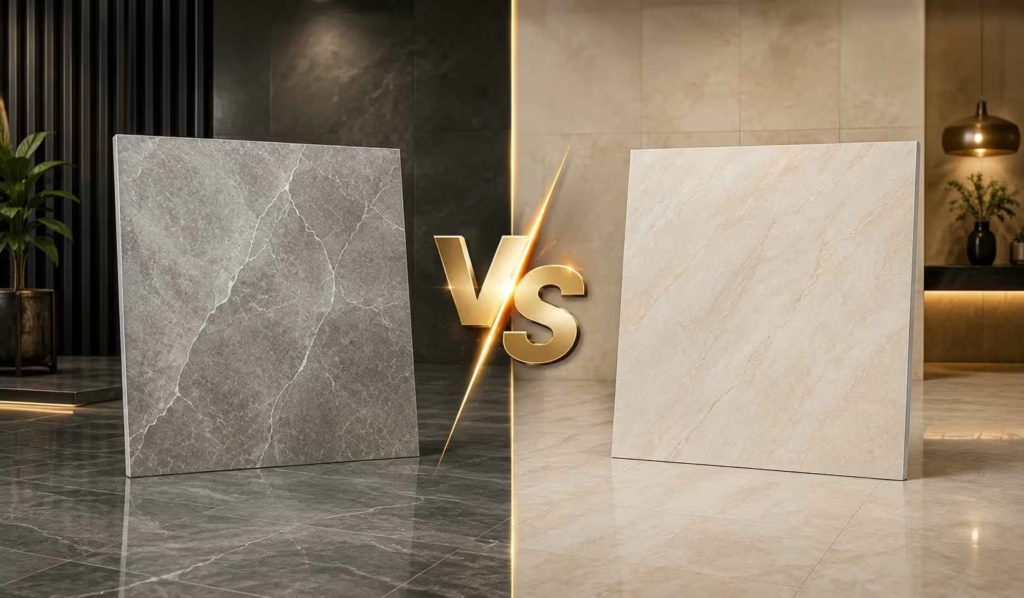
If you’re renovating a home in Lahore or anywhere in Pakistan, the porcelain-versus-ceramic question comes up early — usually right after you’ve picked a colour and before you’ve thought about the room it’s actually going in. Both are genuinely good options. The right choice depends less on which tile is “better” and more on where it’s going and how hard that space works. Here’s a straight comparison to help you decide with confidence.
The Core Difference
Ceramic and porcelain are both made from clay fired in a kiln, but porcelain is fired at a much higher temperature and pressed at higher density. That single manufacturing difference is responsible for almost every practical difference between the two — water absorption, strength, and how they hold up over 10–15 years of daily use.
Durability & Everyday Wear
Porcelain is denser and less porous, which makes it more resistant to chipping, scratching, and surface wear. This is why you’ll see it specified more often for hallways, stairs, kitchens, and any high-traffic commercial space. Ceramic tile is still durable enough for the vast majority of residential use — bedrooms, living rooms, and lower-traffic walls — it simply has a slightly lower tolerance for heavy impact and abrasive foot traffic over time.
Water Absorption & Wet Areas
This is the difference that matters most in Pakistani homes, where bathrooms, kitchens, and exposed terraces deal with real moisture. Porcelain typically absorbs less than 0.5% water by weight, compared to ceramic’s roughly 3%. In practical terms, that means porcelain resists staining, mould, and moisture damage better in bathrooms, kitchen backsplashes, and covered outdoor areas exposed to monsoon humidity.
Price Comparison
Ceramic tiles are generally the more budget-friendly option, which is exactly why they remain the most widely used tile category in Pakistan for straightforward residential flooring. Porcelain tiles — particularly imported large-format and bookmatched slabs — sit at a higher price point, reflecting the denser material, more advanced printing technology, and the finish consistency you get with brands like Infinity and E-tile. The price gap has narrowed in recent years as more porcelain ranges have become available in Pakistan, so it’s worth comparing actual current pricing rather than assuming porcelain is out of reach for a mid-size project.
| Factor | Ceramic Tiles | Porcelain Tiles |
|---|---|---|
| Density & Water Absorption | Higher absorption (~3%) | Very low absorption (<0.5%) |
| Durability | Good for low–medium traffic | Excellent, suited to high traffic |
| Best Rooms | Bedrooms, living rooms, feature walls | Bathrooms, kitchens, terraces, hallways |
| Price Point | More budget-friendly | Higher, reflects density & finish |
| Maintenance | Easy, standard cleaning | Easy, more stain-resistant long-term |
Which Rooms Suit Which Tile?
- Bathrooms & kitchens: Porcelain’s low absorption makes it the safer long-term choice around water and steam.
- Bedrooms & living rooms: Ceramic performs well here at a lower cost, especially for feature walls or lower-traffic flooring.
- Terraces & covered outdoor areas: Porcelain again, given Lahore’s monsoon humidity and heat cycling.
- Hallways & staircases: Porcelain’s scratch resistance holds up better to repeated foot traffic over the years.
Our honest recommendation
There’s no single winner here — plenty of well-finished Pakistani homes mix both. A common approach we see at our DHA showroom is porcelain in bathrooms, kitchens, and high-traffic areas, with ceramic used in bedrooms and secondary rooms to manage overall project cost without compromising on the areas that matter most.
If you’d like to see both side by side, our team can walk you through current Infinity porcelain and E-tile ranges in person, alongside our ceramic tile collection — so you can compare finish, texture, and price before deciding. Book a Free Showroom Consultation
Frequently Asked Questions
Is porcelain tile always better than ceramic?
Not always — it’s better for wet areas and high-traffic rooms, but ceramic is a perfectly durable, cost-effective choice for bedrooms, living rooms, and lower-traffic spaces.
Which is cheaper, porcelain or ceramic tiles in Pakistan?
Ceramic tiles are generally more affordable. Porcelain, especially imported large-format and bookmatched slabs, costs more due to higher density and manufacturing quality.
Can I use ceramic tiles in a bathroom?
Yes, ceramic can be used in bathrooms, but porcelain is the stronger long-term choice due to its lower water absorption and better resistance to moisture damage.
Do porcelain tiles crack easily?
No porcelain is denser and more resistant to cracking and chipping than ceramic, which is why it’s commonly used in high-traffic commercial and residential spaces.
