
Marble Effect Tiles vs Real Marble: Which is Better for Pakistani Homes?
A technical and practical comparison of porcelain marble-effect tiles versus natural marble — covering durability, maintenance, cost, and performance in Pakistan's climate, so you can make the right choice for your project.
Real marble has been the defining luxury surface material in South Asian architecture for centuries — from Mughal monuments to modern Lahore villas. But in the past decade, Italian-engineered marble-effect porcelain has closed the visual gap to the point where even trained eyes struggle to tell the difference from a standing distance. The question is no longer whether porcelain can look like marble — it clearly can. The question is which one performs better in a Pakistani home over the next twenty years, and whether the significant price premium of real marble is justified for your specific project.
What's Inside
- What Each Material Actually Is
- Visual Realism: How Close Has Porcelain Got?
- Performance Specs Compared
- Full Head-to-Head Comparison Table
- Why Pakistan's Climate Changes the Equation
- Real Cost of Ownership — Material, Install & Maintenance
- Which is Better for Which Application?
- Final Decision Guide
- Marble Effect Porcelain at Future Designz
- Frequently Asked Questions
1. What Each Material Actually Is
Real Marble
Natural marble is metamorphic limestone — calcium carbonate recrystallised under heat and pressure over millions of years. Each slab is unique, with veining patterns formed by mineral impurities (iron oxide creates gold tones, chlorite creates green, graphite creates grey). It is porous by nature, requires sealing, and is significantly softer than porcelain. Its beauty is geological — no two pieces are identical.
Marble Effect Porcelain
Marble effect porcelain is manufactured using high-resolution digital inkjet printing technology fired onto a dense feldspar-kaolin clay body at 1,200–1,400°C. Modern production scans actual marble slabs at microscopic resolution and reproduces the veining pattern across the tile surface with sufficient variation to avoid visible repeats. The result is a non-porous tile body with a marble-accurate surface — engineered to perform where real marble fails.
2. Visual Realism: How Close Has Porcelain Got?
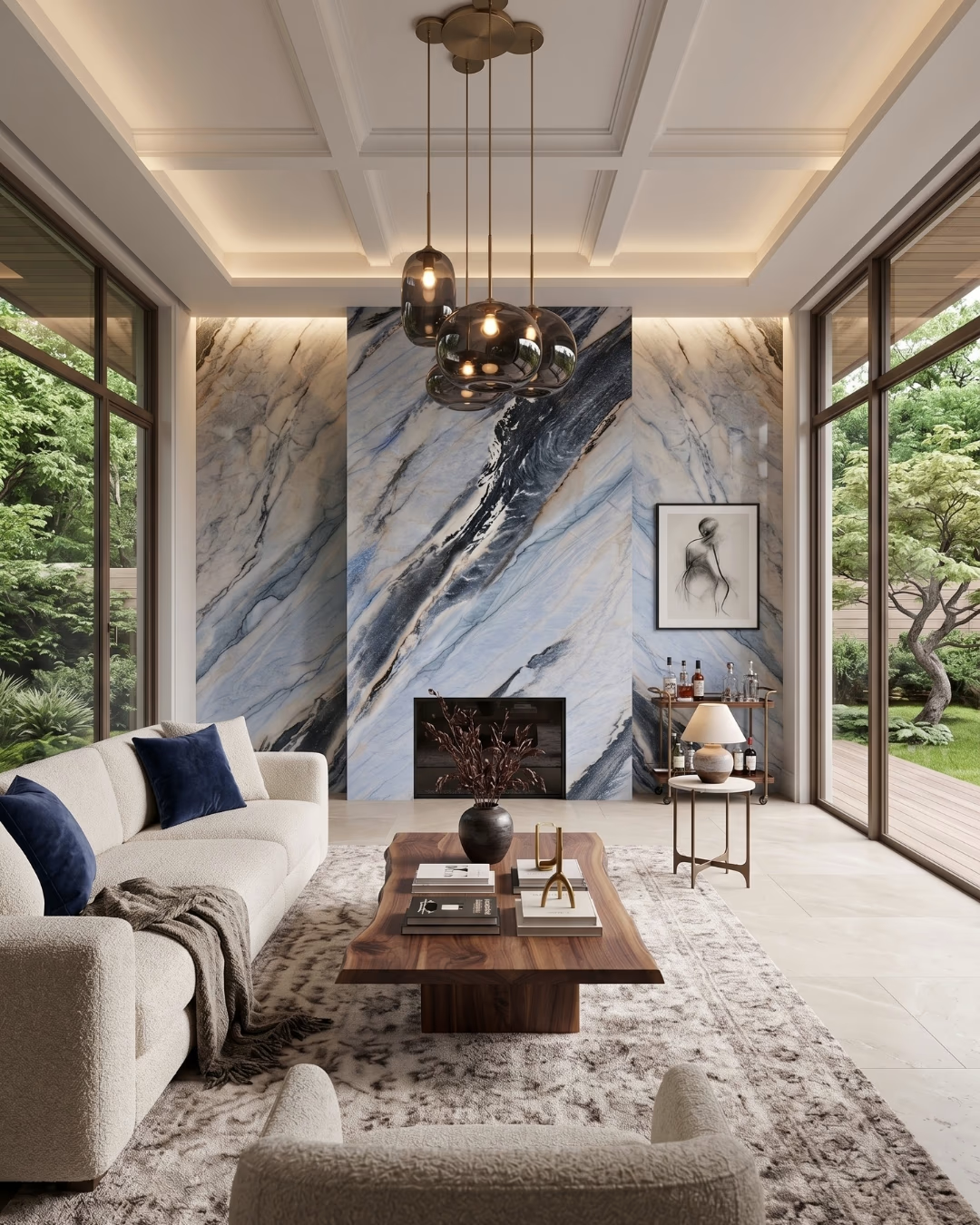
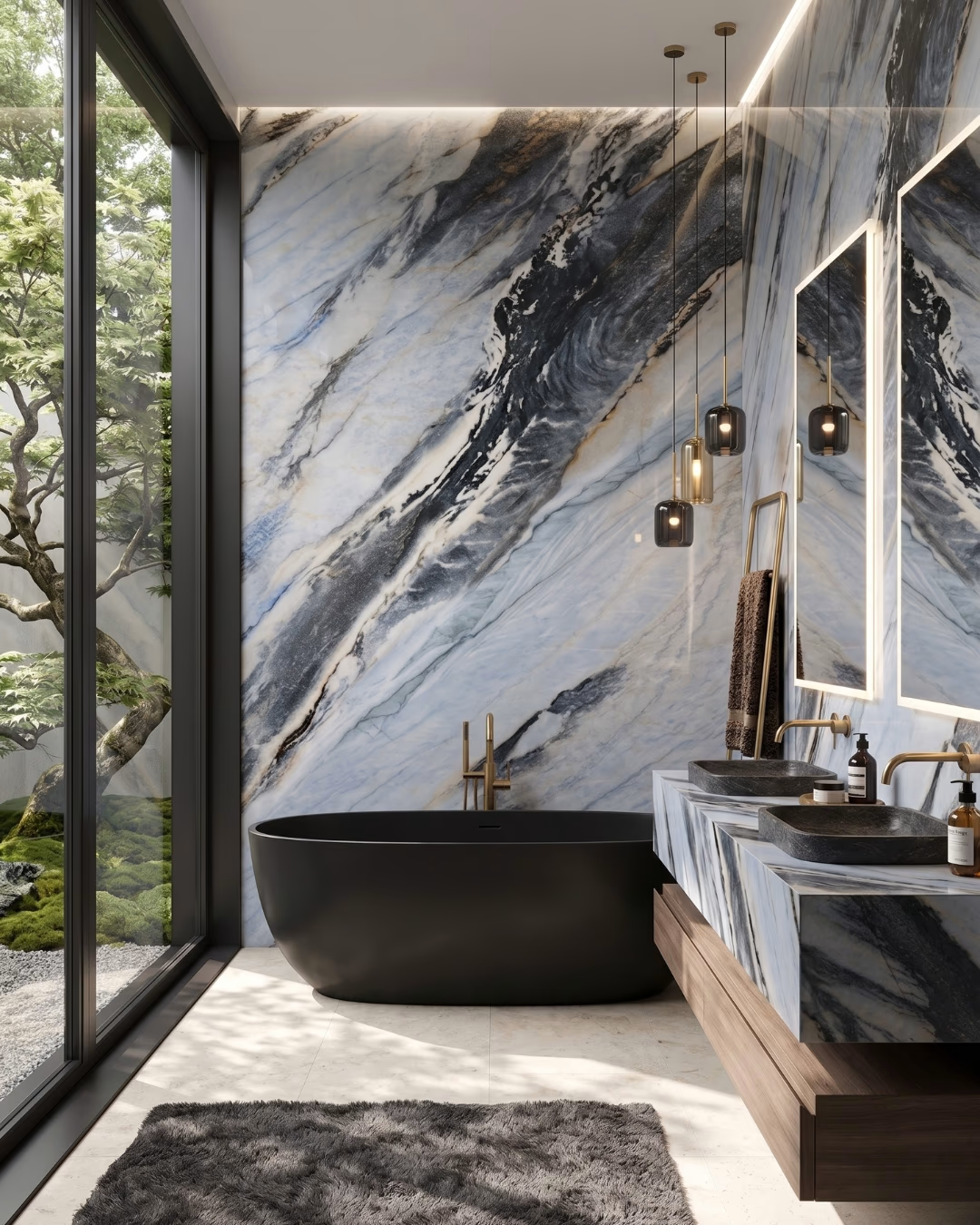
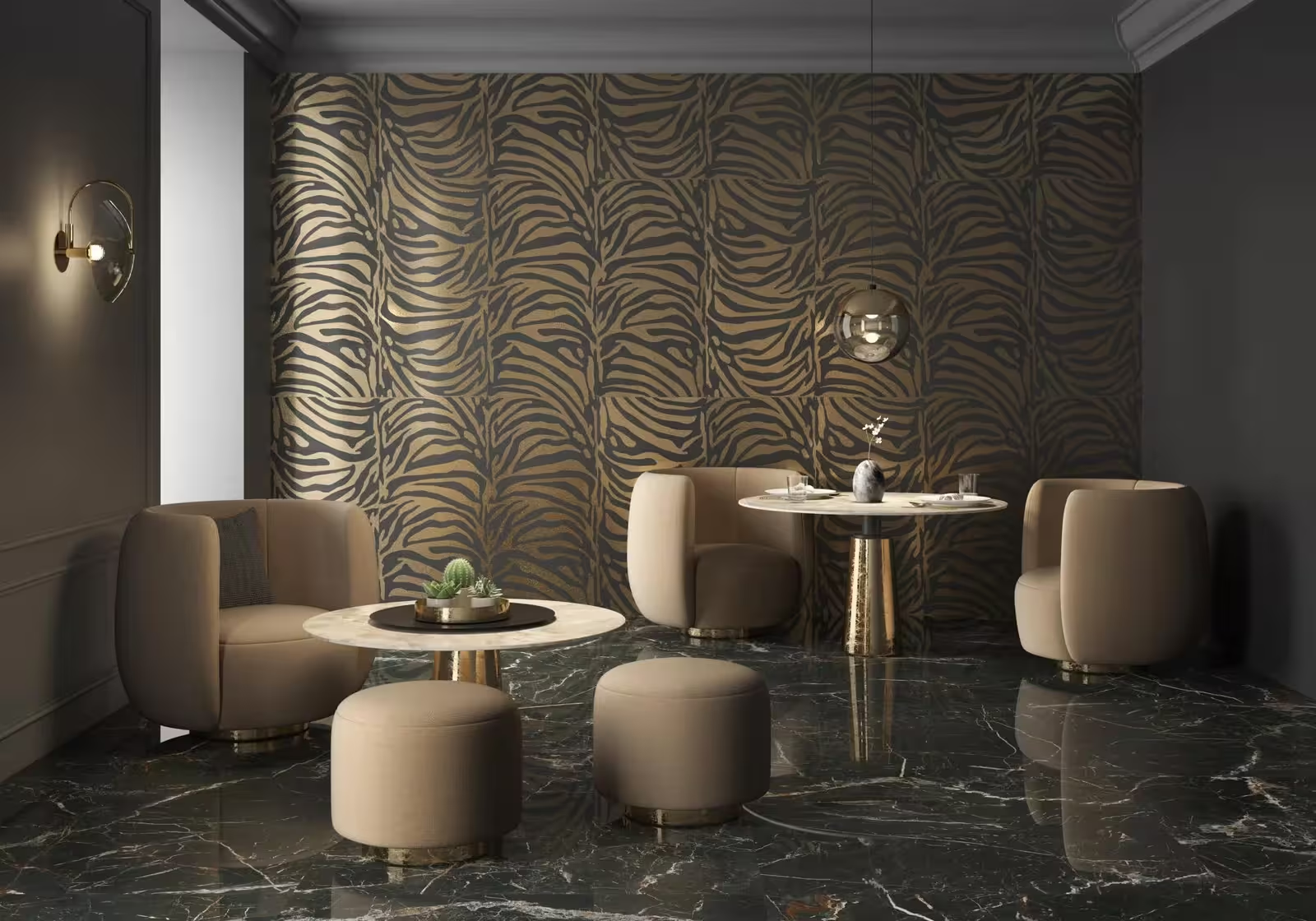
Ten years ago, the answer was "close but distinguishable." In 2026, the answer for premium Italian and Spanish marble-effect porcelain is different. High-resolution inkjet printing now reproduces marble veining at a level of detail — including directional variation, colour depth transitions, and surface texture — that requires very close examination to separate from real stone. Bookmatched porcelain slabs from brands like Infinity mirror the symmetrical vein pattern of a quarried marble slab with a consistency that real marble, by definition, cannot guarantee.

3. Performance Specs Compared
4. Full Head-to-Head Comparison Table
| Criteria | Real Marble | Marble Effect Porcelain |
|---|---|---|
| Water Absorption | 0.2–2% — porous, requires sealing | ≤0.5% — impervious, no sealing needed |
| Surface Hardness | 3–4 Mohs — scratches from keys, grit | 6–8 Mohs — scratch resistant |
| Stain Resistance | Low — tea, oil, wine penetrate fast | Excellent — non-porous surface repels all stains |
| Acid Sensitivity | Damaged by lemon juice, vinegar, cleaners | Acid resistant — no chemical etching |
| Maintenance | Seal every 6–12 months, pH-neutral only | Damp mop weekly, no specialist products needed |
| Authenticity & Uniqueness | Every slab unique — genuine geological beauty | High-resolution print — repeats possible at low end |
| Resale & Prestige Value | Recognised luxury material — valued by buyers | Growing recognition — varies by buyer |
| Large Format Availability | Limited by quarry — consistency varies | Up to 120x240cm — consistent across full run |
| Bookmatching | Natural bookmatching from consecutive slabs | Digital bookmatching — highly accurate reproduction |
| Outdoor Use | Not recommended — frost damage, staining | Frost-resistant grades available for outdoor |
| Wet Area Safety | Polished marble is slippery when wet | Matte/textured options with R10+ slip resistance |
| Installation Cost | High — heavy, requires skilled stonemason | Lower — standard large-format tile installer |
| Material Cost | Very high — imported Italian/Turkish marble | Lower — premium imported porcelain more accessible |
| Colour Consistency | Varies lot-to-lot — quarry dependent | Consistent across batches — controlled production |
| Lifespan (maintained) | Centuries — if sealed and cared for correctly | 50–100 years — if installed correctly |
5. Why Pakistan's Climate Changes the Equation
The standard marble vs porcelain debate is typically framed around European conditions. Pakistan's climate creates a set of specific challenges that make the comparison significantly more one-sided than it might appear in a generic international comparison.
Humidity and Monsoon Season
Lahore's June–September monsoon season brings sustained high humidity that accelerates moisture penetration in porous materials. Real marble that is not perfectly sealed — including the grout lines in a marble floor — absorbs airborne moisture, promotes calcium carbonate leaching (efflorescence), and develops surface staining that is very difficult to reverse. Marble-effect porcelain at 0.5% absorption or less is functionally impervious to this seasonal humidity cycle.
Cooking Culture and Oil Exposure
Pakistani cooking produces significantly more cooking oil vapour and splatter than typical European cooking. Real marble floors in or adjacent to kitchens are extremely vulnerable to oil penetration — an unsealed or worn-seal marble floor in a Pakistani kitchen can show permanent staining within months. Porcelain is entirely non-porous and wipes completely clean regardless of cooking intensity.
Cleaning Products Available Locally
Most household cleaning sprays available in Pakistan's domestic market contain acid or alkaline compounds that permanently etch polished marble surfaces. Marble requires pH-neutral cleaners only — a constraint that is consistently violated by domestic staff who use whatever cleaning product is available. Porcelain tolerates the full range of standard cleaning products without surface damage.
Heat Cycling
Pakistan's extreme temperature range — from below 5°C in Lahore winters to above 45°C in pre-monsoon summers — causes repeated thermal expansion and contraction in porous stone. Over years, this cycle opens micro-fissures in marble, particularly in outdoor and semi-outdoor applications. Porcelain's dense, non-porous body is engineered to handle this thermal cycling without degradation.
6. Real Cost of Ownership — Material, Install and Maintenance
Real Marble — Full Cost
Material + installation + 20-year maintenance
- Material: Imported Italian Carrara or Turkish marble — premium pricing, significant lot variation risk
- Installation: Requires skilled stonemason — higher day rate than standard tiler
- Sealing at install: Professional stone sealer application — recurring cost
- Annual resealing: Every 6–12 months for kitchen and bathroom surfaces — specialist product required
- Stain treatment: Professional poultice treatment for deep stains — not DIY
- Polishing: Professional re-polishing every 3–5 years to restore surface sheen
- Repairs: Chips and cracks require stonemason repair — difficult to match original slab
Marble Effect Porcelain — Full Cost
Material + installation + 20-year maintenance
- Material: Premium imported Italian/Spanish porcelain — lower cost than real marble, consistent quality
- Installation: Skilled large-format tiler with clip levelling system — standard market rate
- Sealing at install: Grout sealing only — no tile surface sealing required
- Annual maintenance: Grout re-seal once per year — DIY possible
- Stain treatment: pH-neutral cleaner and damp mop — zero specialist cost
- Polishing: pH-neutral porcelain polish annually for lappato surfaces — affordable, DIY
- Repairs: Individual tiles can be replaced if damaged — consistent batch matching from good suppliers
7. Which is Better for Which Application?
Living Room Floor
Marble-effect porcelain. High foot traffic, occasional spills, and the reality of Pakistani household cleaning routines make porcelain the correct long-term choice.
PorcelainFeature Wall
Either works well on walls — no moisture or traffic stress. Bookmatched porcelain slabs deliver near-identical aesthetics at lower cost. Real marble on a feature wall is a pure prestige choice.
BothBathroom Floor
Marble-effect porcelain only. Polished marble is slippery when wet and stains readily in wet areas without constant sealing. Matte porcelain with R10+ rating is the safe, practical choice.
PorcelainBathroom Feature Wall
Real marble can work on bathroom walls where it isn't wet constantly. Porcelain slabs give a very similar look with zero maintenance. Budget and personal preference decide here.
BothKitchen Surfaces
Marble-effect porcelain emphatically. Real marble in a Pakistani kitchen — with heavy oil, spice, and acidic food preparation — will stain and etch within the first year regardless of sealing frequency.
PorcelainFormal Lobby or Reception
Real marble remains the ultimate prestige statement in a formal entrance — particularly for commercial properties or high-value villas where the material itself signals quality to visitors.
Real Marble8. Final Decision Guide
Choose Real Marble When…
- The surface is a formal lobby, reception, or feature wall where authenticity and prestige carry specific value
- The space has controlled access — low foot traffic, no cooking proximity, no wet exposure
- A specialist maintenance programme is in place — professional sealing, pH-neutral products only
- Budget is not a constraint and the material itself is the brief
- The project is a high-value commercial or hospitality space where real marble adds measurable resale value
- Uniqueness matters — each slab being genuinely one-of-a-kind is part of the design intent
Choose Marble Effect Porcelain When…
- The surface is a residential floor, kitchen, bathroom, or outdoor area
- Pakistan's climate conditions — humidity, heat cycling, monsoon season — apply
- Standard domestic cleaning routines will be used
- Long-term maintenance cost and effort should be minimised
- Large-format or bookmatched slab aesthetics are desired at a more accessible price
- Consistency across a large floor area is important — porcelain batch matches; marble does not
9. Marble Effect Porcelain at Future Designz
Our marble tile collection at Future Designz includes both natural marble and premium marble-effect porcelain from Italian and Spanish manufacturers — displayed side by side at our DHA Phase 4 showroom so you can make a genuine comparison before deciding.
- Full-size bookmatched slab displays — see the actual scale and veining pattern before specifying
- Real marble samples available alongside porcelain for direct visual comparison
- Technical data sheets for all porcelain collections — absorption rating, slip resistance, PEI rating
- Design consultation available — our team helps you select the right marble-effect collection for your specific application and budget
- Direct import from Italy and Spain — consistent quality, accurate batch matching for large-area floor installations
Compare Real Marble and Porcelain Side by Side
Visit the Future Designz showroom in DHA Phase 4, Lahore and see our full marble and marble-effect porcelain collections displayed together — so you can make a genuinely informed decision about which material is right for your project.
Book a Free ConsultationFrequently Asked Questions
Are marble effect tiles as good as real marble?
For most residential applications in Pakistan — floors, bathrooms, kitchens, and outdoor areas — marble-effect porcelain outperforms real marble on every practical measure: water resistance, scratch hardness, stain resistance, acid tolerance, and maintenance requirement. Real marble retains an advantage in authenticity, uniqueness, and prestige value for formal or controlled-access spaces where those qualities matter more than long-term performance.
Why is real marble not recommended for Pakistani kitchens?
Pakistani cooking involves high-heat oil cooking, acidic spices, and frequent spills — conditions that are particularly damaging to real marble. Cooking oil penetrates unsealed or worn-seal marble permanently. Acidic ingredients etch the polished surface, creating dull marks that require professional re-polishing to remove. Marble-effect porcelain is fully non-porous and acid-resistant, making it the correct material for any cooking-adjacent floor or wall.
Does marble effect porcelain look like real marble?
Premium Italian and Spanish marble-effect porcelain in 2026 reproduces marble veining at a level of detail that is genuinely difficult to distinguish from real stone at normal room-viewing distances. High-resolution digital inkjet printing, combined with bookmatching technology, creates a surface that closely replicates the visual character of quarried marble — including tonal variation, directional veining, and surface texture depth.
How much cheaper is marble effect porcelain than real marble?
Material cost varies significantly by grade and source, but as a general guide, premium imported marble-effect porcelain costs substantially less than comparable-quality imported natural marble — and this gap widens further when installation cost (stonemason vs tiler), ongoing sealing costs, and professional maintenance are factored over a 10–20 year period.
Can marble effect porcelain be used outdoors?
Yes — frost-resistant grades of marble-effect porcelain are suitable for courtyards, terraces, and outdoor living areas. Natural marble is not recommended for outdoor use in Pakistan's climate — the combination of monsoon moisture penetration and summer heat cycling opens micro-fissures in the stone surface over time. Always specify a textured or matte finish for outdoor porcelain use to ensure adequate slip resistance.
Where can I see marble effect tiles and real marble together in Lahore?
Future Designz showroom in DHA Phase 4, Lahore displays both real marble samples and marble-effect porcelain collections from Infinity, Pamesa, Vives, and Etile side by side — allowing a direct visual comparison at full scale before making a purchase decision.
