
Spanish Tiles vs Italian Tiles: Key Differences Explained
Two of the world's great tile-producing nations — Spain and Italy — and two very different design philosophies. Here is what actually separates them, and how to choose between them for your project.
Spain and Italy together account for the majority of the world's premium imported tile production. Both countries have centuries of ceramic tradition, global export markets, and reputations that command respect across architecture and interior design. But they are not the same — not in philosophy, not in production method, not in what they do best. If you are choosing imported tiles for a home or commercial project in Pakistan, understanding the difference between Spanish and Italian tiles is the decision that shapes everything else that follows.
What's Inside
- Two Countries, Two Tile Traditions
- How Production Methods Differ
- Full Head-to-Head Comparison
- Spanish Tiles — Dune & Pamesa Explained
- Italian Tiles — What Makes Them Different
- Which to Choose for Which Application
- Final Decision Guide
- Spanish & Italian Tiles at Future Designz
- Frequently Asked Questions
1. Two Countries, Two Tile Traditions
The Art of the Surface
Spain's tile tradition is rooted in Moorish and Mediterranean ceramic craft — a heritage of decorative surface work, hand-applied glazes, pattern, and colour. Spanish manufacturers are world leaders in ceramic wall tiles, decorative mosaics, and artisan-finish porcelain where visual expression is the primary goal. The surface is where Spanish tiles make their argument.
The Science of the Body
Italy's tile tradition grew out of a materials engineering culture — the same nation that pioneered modern concrete, structural design, and industrial manufacturing. Italian manufacturers are world leaders in large-format porcelain, slab production, and technical floor tile where density, dimensional consistency, and structural performance define quality. The body of the tile is where Italian tiles make their argument.
2. How Production Methods Differ
The difference in output begins in the kiln. Italian porcelain manufacturers typically operate at higher firing temperatures — 1,200–1,400°C — using refined feldspar and kaolin clay blends that produce a tile body of exceptional density. Spanish manufacturers, particularly for ceramic wall tiles and decorative ranges, often fire at lower temperatures which allows for a wider range of surface glaze effects, hand-applied finishes, and colour depths that high-temperature firing would destroy.
Italy's large-format slab technology — producing continuous porcelain surfaces up to 120×280cm or larger — was pioneered by Italian manufacturers and remains an area where Italian production is technically ahead of most Spanish equivalents. Spain, conversely, has invested heavily in surface printing and digital decoration technology, producing ceramic wall tiles with photographic-quality surface detail that Italian manufacturers rarely attempt at the same scale or variety.
3. Full Head-to-Head Comparison
| Category | 🇪🇸 Spanish Tiles | 🇮🇹 Italian Tiles |
|---|---|---|
| Primary Strength | Decorative surface design | Technical floor engineering |
| Tile Body Density | Varies — ceramic to porcelain range | Consistently high — feldspar-refined |
| Water Absorption | 0.5–7% depending on product | ≤ 0.5% — impervious porcelain standard |
| Surface Variety | Widest in the world — glazes, reliefs, patterns | Strong but more restrained — marble & stone effect focus |
| Large Format / Slabs | Available but limited range | Industry-leading — up to 120×280cm |
| Bookmatching | Limited | Premium bookmatched slab series available |
| Decorative Wall Tile | World-class — Dune, Pamesa, Vives | Available but not primary focus |
| Mosaic Range | Extensive — glass, ceramic, shaped | Available in premium marble-effect |
| Floor Performance (PEI) | PEI II–IV depending on range | PEI IV–V across most floor ranges |
| Dimensional Consistency | Good — improves at premium tier | Exceptional — rectified edges standard |
| Outdoor / Frost Resistant | Available in technical ranges | Standard across most floor collections |
| Price Point | More accessible at decorative tier | Premium — floor engineering commands higher cost |
| Key Brands (at FD) | Dune, Pamesa Cerámica, Vives, Etile | Infinity |
| Best Used For | Walls, backsplashes, mosaics, feature areas | Floors, slabs, feature walls, commercial |
4. Spanish Tiles — Dune & Pamesa Explained
Dune — Surface as Statement
Dune is one of Spain's most design-forward tile manufacturers — a brand whose collections read more like contemporary art than construction material. Their wall tile ranges cover everything from deep relief ceramic to photographic-quality digital print porcelain, with decorative depth that no Italian equivalent approaches. If a project requires a wall or feature surface that makes a genuine design statement, Dune is the starting point.
Signature Range
Decorative ceramic wall tiles, mosaic collections, large-format wall panels in gloss, matte, and textured finishes — with colour and pattern ranges that span minimalist neutrals to maximalist statement surfaces.
Best Application
Feature walls in living rooms and master bedrooms, bathroom accent walls, kitchen backsplashes, hotel and hospitality interiors, any surface where visual expression is the primary brief.
At Future Designz
Full display panels available in showroom. Multiple collections across decorative, gloss, textured, and mosaic categories — with samples available to take home before purchase.
Pamesa Cerámica — Spanish Scale & Consistency
Pamesa is one of Spain's largest tile manufacturers and among the most technically consistent Spanish producers — a brand that bridges the gap between decorative surface excellence and reliable structural performance. Their porcelain floor ranges perform at a higher technical level than most Spanish competitors, while their wall tile and ceramic collections retain the surface quality and design range that Spain is known for.
Signature Range
Large-format porcelain floor tiles, marble-effect series, concrete and stone-effect matte collections, and decorative ceramic wall tiles — a broad product range that covers floors and walls in a single brand relationship.
Best Application
Residential floors requiring Spanish aesthetics with reliable structural performance, bathroom wall and floor combinations, hallways, and commercial spaces where budget and quality must both be satisfied.
At Future Designz
Available via Pamesa Cerámica at Future Designz — the only authorised import stockist in DHA, Lahore carrying full Pamesa collections with direct-import pricing.
5. Italian Tiles — What Makes Them Different
Infinity (Italy) — Engineering at the Highest Level
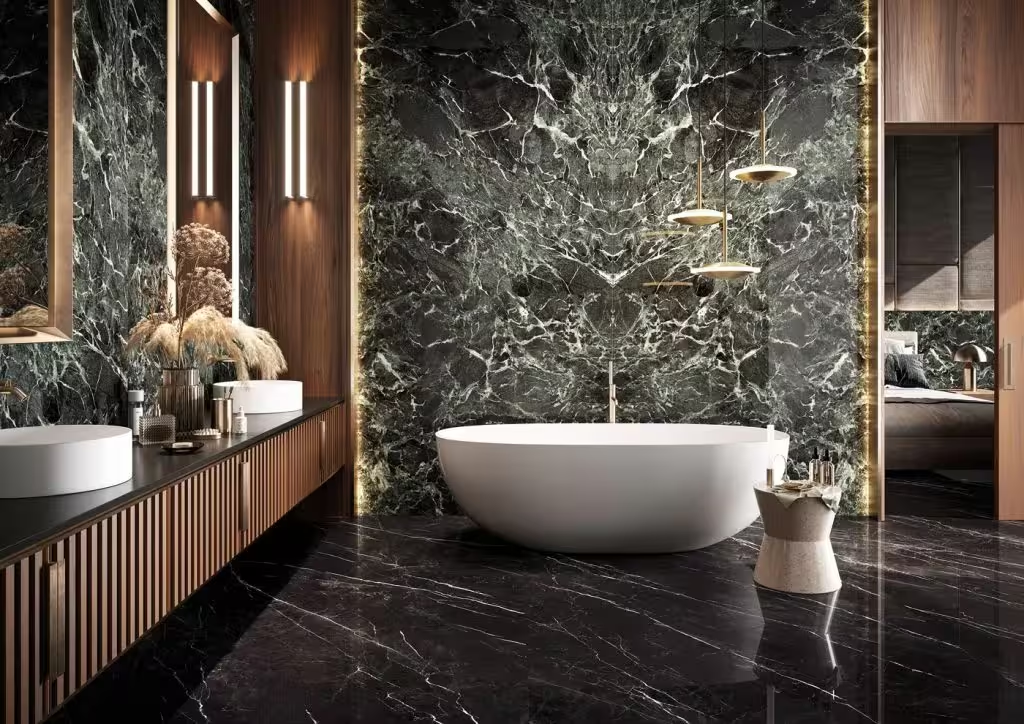
Infinity represents the Italian tile manufacturing tradition at its most technically refined — a porcelain producer whose floor and slab collections are built around material density, dimensional precision, and long-term structural performance. The marble-effect series in particular achieves a veining depth and surface consistency that sets a clear benchmark in the imported tile market in Pakistan.
Signature Range
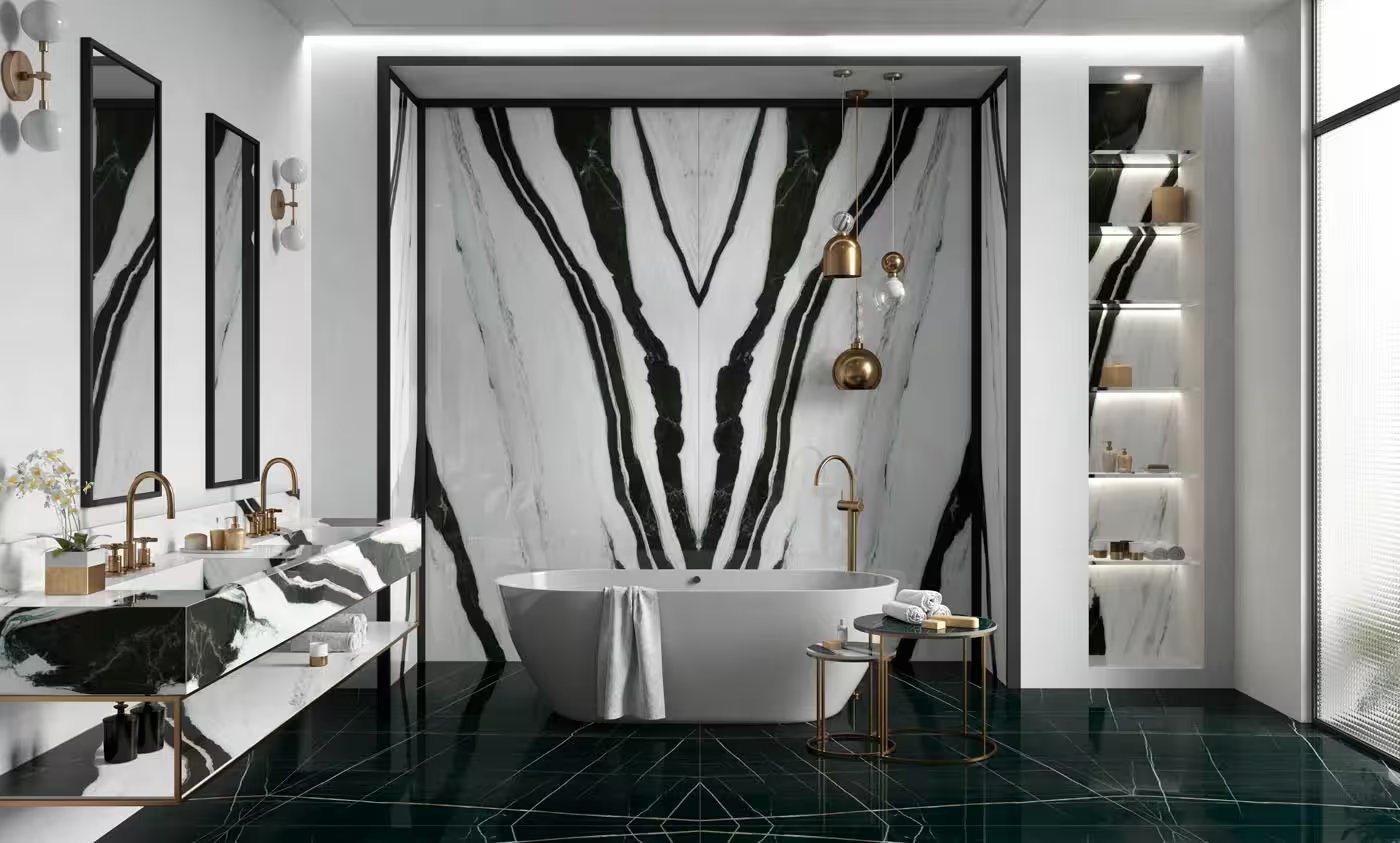
Bookmatched marble-effect porcelain slabs, large-format floor collections in matte and lappato finishes, premium rectified-edge porcelain with dimensional tolerances that allow near-zero grout joints.
Best Application
Luxury residential floors, bookmatched feature walls, hotel lobbies and formal reception areas, commercial floors requiring PEI IV–V performance over twenty-plus years.
At Future Designz
Full bookmatched slab displays available. The Infinity marble-effect range is the strongest single argument for Italian porcelain over any equivalent Spanish product at the same price point.

6. Which to Choose for Which Application
Living Room Floor
Italian porcelain for large-format seamless coverage and long-term abrasion resistance. Lappato or matte finish in a marble or stone effect.
ItalianFeature Wall
Italian bookmatched slab for formal symmetrical drama, or Spanish decorative ceramic for pattern-led design expression. Both are valid — different aesthetic outcomes.
BothBathroom Floor
Italian porcelain — water absorption ≤0.5%, frost-resistant body, matte or textured finish for slip resistance. Non-negotiable for wet floor use.
ItalianBathroom Feature Wall
Spanish ceramic or decorative porcelain from Dune or Pamesa — the wall is where surface design should lead. Relief textures, gloss finishes, and pattern-led ceramics excel here.
SpanishKitchen Backsplash
Spanish ceramic mosaic or glazed wall tile — Dune's decorative range and Pamesa's ceramic collections are built for exactly this application. Wide colour and pattern variety.
SpanishCommercial Floor
Italian porcelain rated PEI IV–V. Office lobbies, retail floors, hospitality spaces — anywhere that requires certified abrasion resistance over a decade or more of heavy traffic.
ItalianOutdoor / Driveway
Italian frost-resistant technical porcelain. Spanish technical ranges exist but Italian producers have the wider, more certified selection for exterior applications.
ItalianMosaic & Accent Areas
Spanish without question — Dune's mosaic collections, shaped ceramic formats, and glass mosaic options far exceed anything in Italian production at comparable price points.
SpanishMixed Residential Project
Use both — Italian porcelain on all floors and wet areas, Spanish ceramic on all wall and decorative surfaces. This is how most premium projects in Lahore are correctly specified.
Both7. Final Decision Guide
Choose Spanish Tiles When…
- The surface is a wall, feature area, or backsplash where design expression is the priority
- The brief calls for decorative mosaic, shaped tile, or artisan-finish ceramic
- Pattern, colour depth, or relief texture is the primary design requirement
- Budget allows for design-led surfaces without needing maximum structural performance
- The project is a kitchen backsplash, bathroom accent wall, or decorative feature panel
- The brand is Dune, Pamesa, Vives, or Etile — all available at Future Designz DHA
Choose Italian Tiles When…
- The surface is a floor — residential, commercial, or outdoor — where structural performance is non-negotiable
- Large format (80×80cm and above) or bookmatched slab installation is specified
- Water absorption ≤0.5% is required — bathrooms, wet rooms, outdoor surfaces
- PEI IV–V abrasion resistance is needed for commercial or heavy-traffic use
- Dimensional precision and rectified edges are required for minimal grout lines
- The brand is Infinity — available at Future Designz DHA showroom
8. Spanish & Italian Tiles at Future Designz
Future Designz is one of the only tile showrooms in Lahore carrying a curated selection of both Spanish and Italian imported tile brands under one roof. Every brand in our collection is imported directly — so you get accurate product data, verified technical specifications, and full-size display panels for comparison.
Spanish Brands
Italian Brands
- Full-size display panels for every collection — see Spanish and Italian tiles side by side before deciding
- Technical data sheets on request for all products — water absorption, PEI rating, slip resistance, frost resistance
- Physical samples available to take home and view under your own lighting conditions
- Design consultation available to help specify the correct combination of Spanish and Italian tiles for your project
- Direct import — no middlemen, accurate product representation, and consistent stock
Compare Spanish & Italian Tiles in Person
Visit the Future Designz showroom in DHA Phase 4, Lahore and see full collections from Dune, Pamesa, Vives, Etile, and Infinity side by side — with our team to help you specify the right combination for your project.
Book a Free ConsultationFrequently Asked Questions
What is the main difference between Spanish and Italian tiles?
Spanish tiles lead with surface design — decorative glazes, patterns, relief textures, and ceramic artistry. Italian tiles lead with structural engineering — high-density porcelain, large-format slab capability, and technical floor performance. Spanish tiles excel on walls and decorative surfaces; Italian tiles excel on floors, wet areas, and commercial applications.
Are Italian tiles better quality than Spanish tiles?
Not universally. Italian tiles lead in technical floor performance — density, water absorption, and large-format precision. Spanish tiles lead in decorative surface design — pattern variety, glaze depth, and ceramic artistry. The best projects use both: Italian porcelain on floors and wet areas, Spanish ceramic on walls and feature surfaces.
Which Spanish tile brands are available in Pakistan?
Future Designz in DHA Phase 4, Lahore carries imported Spanish tile collections from Dune, Pamesa Cerámica, Vives, and Etile. These are among Spain's most respected manufacturers, covering decorative ceramics, porcelain floors, mosaics, and technical ranges.
What is Pamesa Cerámica known for?
Pamesa Cerámica is one of Spain's largest tile manufacturers, known for a broad product range that covers both decorative ceramic wall tiles and reliable large-format porcelain floor tiles. They bridge the gap between Spanish surface artistry and technical structural performance — making them one of the most versatile Spanish brands for full-project specification.
Should I use Spanish or Italian tiles for my bathroom?
Use Italian porcelain for bathroom floors — its water absorption rate of 0.5% or less is essential for wet surface safety and longevity. Use Spanish ceramic or decorative porcelain for bathroom walls — this is where Spain's design range and surface variety deliver the most value. Combining both gives you the safest floor and the most visually interesting walls.
Where can I buy imported Spanish and Italian tiles in Lahore?
Future Designz showroom in DHA Phase 4, Lahore carries directly imported Spanish tiles from Dune, Pamesa, Vives, and Etile, and Italian porcelain from Infinity — all displayed in full panels for side-by-side comparison with complete technical documentation available on request.
