
Modern Bathroom Design in Pakistan — Complete Tile Selection Guide
Six modern bathroom design styles, a complete tile selection framework, and room-by-room specification guidance — everything you need to design and tile a modern bathroom in Pakistan from scratch.
Modern bathroom design is not a single look — it is a design philosophy built around three principles: material honesty, spatial clarity, and functional resolution. A modern bathroom eliminates everything decorative that does not serve a purpose, selects materials that perform as well as they look, and organises every element so the space functions without friction. In Pakistan's premium residential market — DHA, Bahria Town, Gulberg — modern bathroom design has become the dominant brief across both new construction and renovation projects. This guide covers everything: the six modern bathroom design styles, how to select tiles for each one, the specifications that matter, and the decisions that determine whether a modern bathroom stays modern in five years or begins to feel dated.
What's Inside
- What Makes a Bathroom Truly Modern
- Six Modern Bathroom Design Styles for Pakistan
- Tile Selection Framework — How to Choose the Right Tile
- Tile Specifications That Matter in Modern Bathrooms
- Tile Layout and Grout — the Details That Define Modern
- Room-by-Room Tile Selection Guide
- Five Modern Bathroom Design Mistakes to Avoid
- Step-by-Step Design Process
- Frequently Asked Questions
1. What Makes a Bathroom Truly Modern
Modern bathroom design is frequently misunderstood as a visual style — white walls, floating vanity, matte black taps — when it is actually a set of design principles that produce a particular kind of spatial experience. Understanding these principles is what separates a modern bathroom that feels genuinely resolved from one that is simply using contemporary finishes without coherence.
Material Honesty
Every surface material is selected for what it actually is — not what it is pretending to be. Marble-effect porcelain is used because it performs better than marble, not as a substitute that apologises for not being real. The material earns its place through performance and visual coherence, not imitation.
Spatial Clarity
Modern bathrooms eliminate visual noise. Grout lines match tile tone so surfaces read as continuous. One feature surface carries the design statement — the rest are quiet. Storage is concealed. Pipework is hidden. The eye has nowhere to land except the surfaces themselves.
Functional Resolution
Every design decision in a modern bathroom has a functional reason. Matte finish on floors — safety. Lappato on walls — warmth under artificial light. Large format — fewer grout lines to clean. The function and the aesthetic align rather than compete. The bathroom looks the way it does because it works the way it should.
2. Six Modern Bathroom Design Styles for Pakistan
Warm Minimalism — The Most Popular Modern Brief in DHA
Warm neutral tones, large format tiles, minimal grout lines, tonal unity from floor to ceiling. The bathroom that feels expensive without trying. The dominant modern brief in Lahore's premium residential market.
Defining Principle
One material family — warm greige or ivory — across every surface in two finishes: matte on floor (safety), lappato on walls (warmth). Grout disappears. The room reads as a single material.
Tile Specification
Floor: 60x60cm warm greige matte porcelain (R10+). Walls: 60x120cm or 120x60cm warm greige lappato porcelain. Grout matched exactly to tile tone at 1–2mm joint throughout.
Fixtures
Brushed gold or warm brass tapware. Floating vanity in warm wood veneer or matte greige lacquer. Frameless mirror or back-lit mirror. Recessed ceiling spotlights in warm white (2700K).
Imported Tile
Infinity (Italy) or Pamesa (Spain) warm greige collections — both carry matte and lappato finishes in the same colourway with dimensional consistency critical for 1mm joint installation.
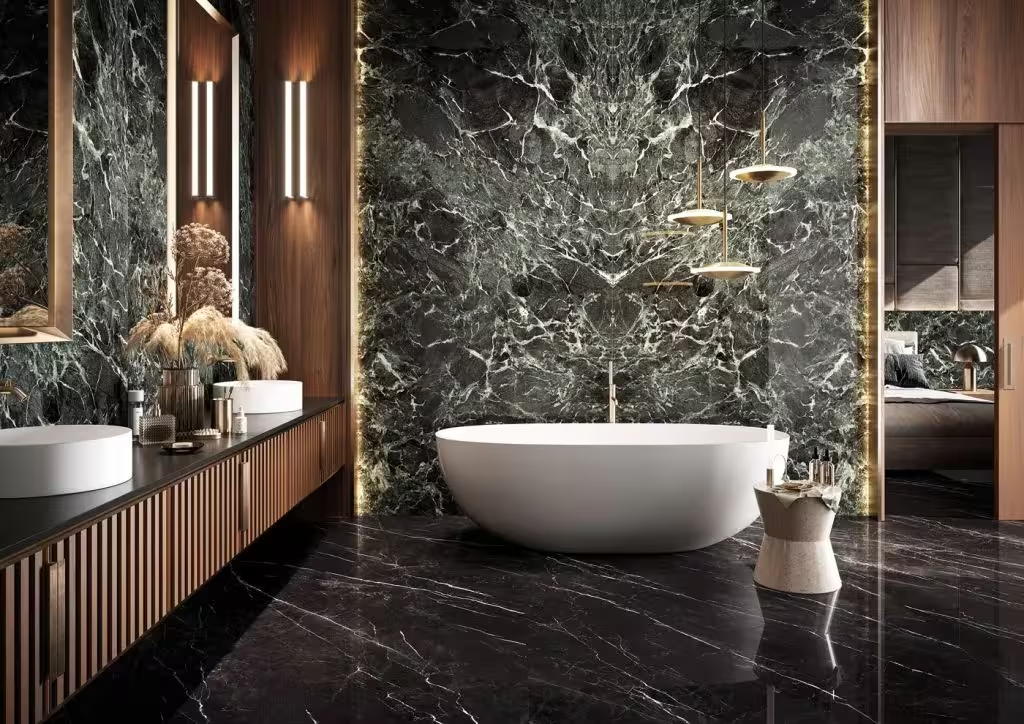
Marble Luxury — Statement Material in a Modern Framework
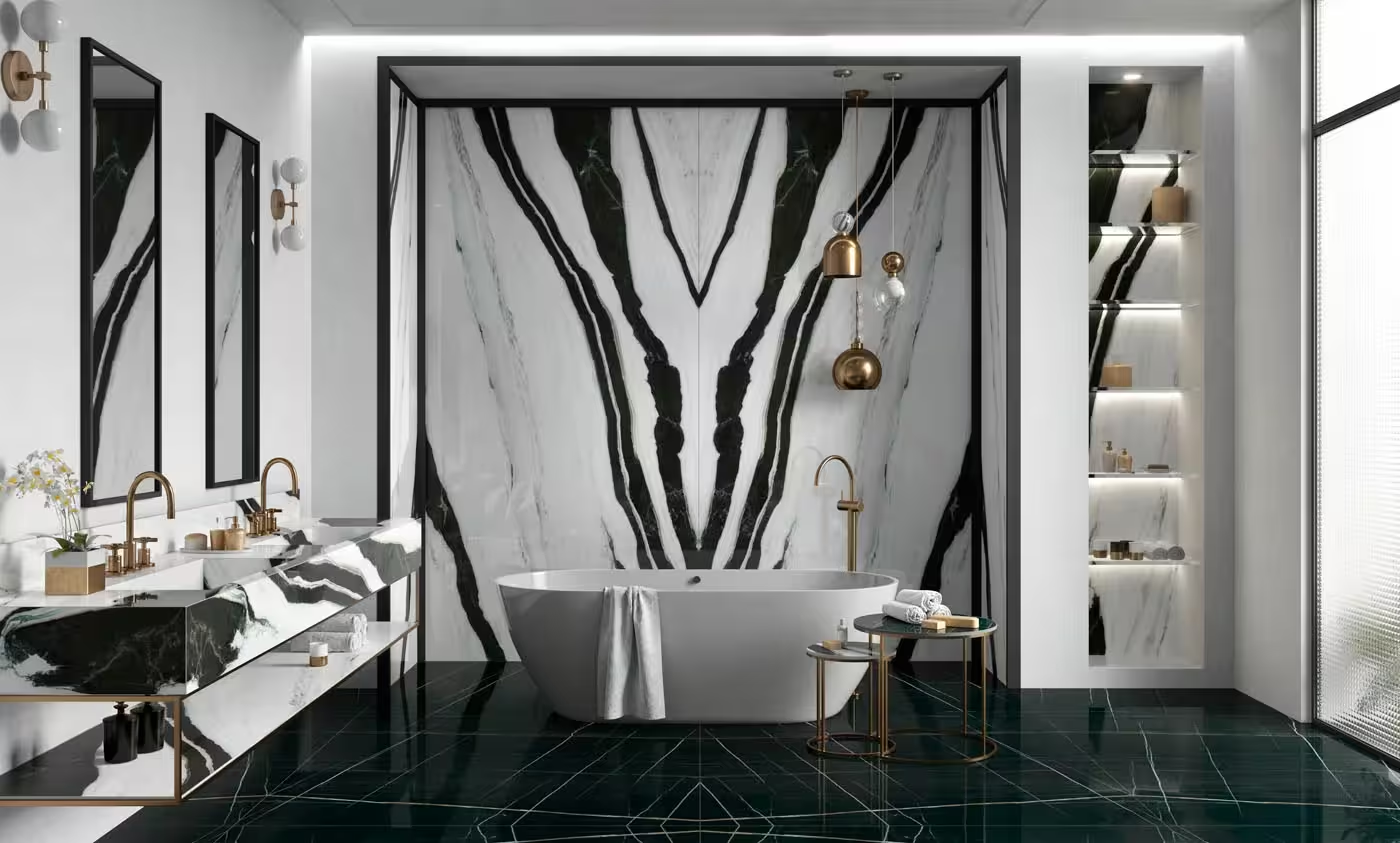
The marriage of the most classic bathroom material with an entirely modern spatial logic. Bookmatched marble-effect porcelain, large format, near-invisible grout. Maximum luxury with none of the maintenance cost of real marble.
Defining Principle
The marble surface pattern is the entire design statement. Everything else — fixtures, sanitaryware, grout — disappears. White or ivory Calacatta lappato on walls, matte on floor. Bookmatched on the shower feature wall.
Tile Specification
Floor: 60x60cm Calacatta matte porcelain (R10+). Walls: 60x120cm Calacatta lappato. Feature wall: bookmatched 120x240cm or 60x120cm paired. White matching grout at 1mm joint.
Fixtures
Matte black or brushed gun-metal tapware. White square-edged sanitaryware. Frameless glass shower enclosure. The fixtures are background elements — the marble is the foreground.
Imported Tile
Infinity (Italy) Calacatta or Statuario marble-effect — the most accurate surface reproduction in our imported range. Bookmatched pairs available for feature wall specification.
Biophilic Modern — Nature Materials, Modern Geometry
The fastest-growing modern bathroom design direction globally — and increasingly requested in Lahore's contemporary residential market. Natural material surfaces (stone effect, travertine, warm earth tones) within a strictly modern geometric framework.
Defining Principle
Natural material character — travertine, limestone, warm sandstone — within clean geometric lines and modern proportions. No ornament, no pattern, no traditional decorative references. Nature as texture, not as theme.
Tile Specification
Floor: 60x60cm travertine-effect or limestone matte porcelain (R10+). Walls: 60x120cm warm stone-effect lappato. Feature wall: fluted or textured travertine ceramic in shower area or above vanity.
Fixtures
Brushed bronze or warm brass tapware. Natural wood floating vanity. Pendant lighting over vanity in warm metal finish. Matte white or warm grey sanitaryware. Indoor plants where ventilation allows.
Imported Tile
Vives (Spain) stone and travertine collection — most complete range of natural-material effect matte porcelain in our imported range, with R10 ratings certified for bathroom floor use.
Dark Moody Modern — Intimate Luxury
Deep charcoal, warm slate, or near-black surfaces with carefully layered artificial lighting. The modern bathroom as a private retreat — immersive, intimate, and visually dramatic. Requires excellent lighting design to avoid feeling oppressive.
Defining Principle
Deep dark walls in lappato or textured finish — the surface absorbs ambient light and creates a cocoon-like atmosphere. Light floor anchors the space. Warm artificial lighting is essential — this design does not work with cool white LEDs.
Tile Specification
Floor: 60x60cm warm ivory or light stone matte (R10+). Walls: 60x120cm deep charcoal or warm dark slate lappato porcelain. Dark matching grout. All wall tiles floor-to-ceiling for full immersion.
Lighting Essential
2700K warm white wall-mounted vanity lighting at eye level. Recessed warm spots in ceiling. Backlit mirror. Niche lighting in shower. Without warm layered lighting this design reads as gloomy rather than moody.
Imported Tile
Dune (Spain) or Pamesa (Spain) deep charcoal and dark slate lappato collections — surface variation in dark tiles prevents monotony. Match floor tile from Vives (Spain) ivory stone range.
Japandi Modern — Quiet, Calm, Resolved
Japanese wabi-sabi meets Scandinavian minimalism — warm neutrals, natural wood, matte surfaces, complete absence of decoration. The most restrained modern bathroom style. Achieves its effect through subtraction rather than addition.
Defining Principle
Every element serves a purpose — nothing decorative exists without function. Warm sandy or pale stone matte tile on all surfaces. Wood-tone floating vanity. No feature tiles, no pattern, no accent colours. The absence of decoration is the design.
Tile Specification
Floor and walls: same warm sand or pale stone-effect matte porcelain throughout. 60x120cm or 60x60cm. Matching grout throughout — not contrasting. No tile mixing, no feature walls. Tonal unity is absolute.
Fixtures
Brushed stainless steel or matte white tapware only — no gold, no black. Integrated shelf niches in the same tile as walls. Concealed cistern. Frameless mirror — no frame, no surround. Complete visual silence.
Imported Tile
Etile (Spain) or Pamesa (Spain) warm sand and pale stone-effect matte collections — the surface texture is subtle rather than dramatic, which suits the Japandi philosophy of quiet material presence.
Contemporary Glam — Modern with Warmth and Personality
The modern bathroom that does not sacrifice warmth or personality for restraint. Marble-effect lappato, brushed gold fixtures, navy or sage feature wall, warm LED ambience. Design-led without being cold or clinical.
Defining Principle
A warm marble or ivory base tile across most surfaces, with one bold feature surface — deep navy, sage green, or warm terracotta — that adds character without disrupting the modern framework. Gold fixtures tie the palette together.
Tile Specification
Floor: 60x60cm warm marble-effect matte (R10+). Main walls: 60x120cm ivory or Calacatta lappato. Feature wall (one surface only): bold colour gloss or lappato ceramic in 60x120cm.
Fixtures
Brushed gold or polished brass tapware throughout. Oval or round basin — not rectangular. Warm pendant lighting over vanity. Gold-frame mirror or backlit warm mirror. The gold connects the ivory floor, marble walls, and feature wall colour.
Imported Tile
Infinity (Italy) for marble base tiles — Dune (Spain) for the bold feature ceramic. Dune's gloss and lappato finishes in deep colour tones are the most resolved in our imported range for this design.
3. Tile Selection Framework — How to Choose the Right Tile
Modern bathroom tile selection follows a framework — not a mood board. Start with function and work toward aesthetics, not the other way around. Choosing a tile because it looks beautiful and then hoping it performs correctly is the most reliable path to an expensive mistake.
Define the surface — floor, wall, or feature
Each surface has different technical requirements. Floor tiles need R10+ slip resistance and matte finish. Wall tiles have no slip requirement — full finish freedom. Feature surfaces have maximum design latitude. Never select a tile without first knowing which surface it is for.
Confirm the technical specification
For floor tiles: verify R-value (R10 minimum), water absorption (max 0.5%), and PEI rating (III minimum for residential bathrooms). Request the technical data sheet — not just the salesperson's assurance. Any quality imported tile supplier provides this documentation on request.
Choose material and finish within specification
Once technical requirements are confirmed, select material type (porcelain, ceramic) and finish (matte, lappato, satin, gloss). For modern bathrooms: porcelain throughout, matte on floors, lappato on main walls, finish freedom on feature surfaces.
Select format proportional to room size
Large format (60x120cm) minimises grout lines and suits larger bathrooms. 60x60cm is versatile for most rooms. Avoid 30x30cm in modern bathrooms — the visible grout grid contradicts the modern principle of spatial clarity. Larger tile, fewer joints, cleaner space.
Choose colour in your actual bathroom
Take full-size samples home and evaluate under your bathroom's artificial lighting at the time of day the bathroom is most used. Morning natural light, evening warm LED, and daytime bathroom lighting produce completely different results from the same tile. Never decide from a showroom sample chip.
Select grout colour last — always match to tile
Grout colour should disappear into the tile surface. Match it to the tile tone exactly — not to a contrasting colour unless the grout pattern is a deliberate design element (metro tile with coloured grout). For all modern minimalist designs: invisible grout is the goal.
4. Tile Specifications That Matter in Modern Bathrooms
| Specification | What It Measures | Modern Bathroom Requirement | Where to Verify |
|---|---|---|---|
| R-Value | Slip resistance on wet surfaces | R10 floor minimum — R11 shower tray | Technical data sheet |
| Water Absorption | Porosity — how much moisture the tile absorbs | ≤0.5% — porcelain standard | ISO 13006 certification on data sheet |
| PEI Rating | Abrasion resistance under foot traffic | PEI III minimum — PEI IV for heavy use | Technical data sheet |
| Breaking Strength | Load resistance — important for large format tiles on heated floors | ≥1,300N for 60x60cm and above | Technical data sheet |
| Dimensional Tolerance | Size consistency — critical for 1mm grout joints | ±0.5mm or better — rectified edge | Product specification sheet |
| Shade / Batch Number | Production batch colour calibration | Same batch number on all boxes — check before installation | Printed on tile box |
Always request the technical data sheet before purchasing — not after. The data sheet is the only reliable source for R-value, absorption rate, and PEI rating. If a supplier cannot provide this documentation, the tile has not been tested to international standards and should not be specified for a bathroom floor in Pakistan.
5. Tile Layout and Grout — the Details That Define Modern
Modern Layout Choices
- Stacked vertical — large format wall tiles stacked vertically (60x120cm portrait) — draws the eye upward, makes ceilings feel higher
- Stacked horizontal — 60x120cm landscape on walls — contemporary, calm, makes rooms feel wider
- Running bond (1/3 offset) — wall tiles offset by one third — more subtle than half-offset, more interesting than stacked
- Floor to ceiling continuous — same tile from floor through to ceiling with no border or break — maximum spatial clarity
- Matching grout at 1–2mm — grout disappears, surface reads as continuous material
What Breaks the Modern Look
- Contrasting grout colour — visible grout grid fragments the surface and contradicts the principle of spatial clarity
- Decorative borders at dado height — border tiles visually cut the room in half horizontally, making it feel shorter
- Mixed tile sizes on the same wall — creates visual noise that the eye cannot resolve without finding a hierarchy
- Tiles not reaching ceiling — the line where tiled wall meets painted wall is always visible and rarely looks intentional
- Wide grout joints (5mm+) — wide joints are for rustic or traditional aesthetics — they contradict the clean geometry of modern design
6. Room-by-Room Tile Selection Guide
Master En-Suite (8–15 m²)
60x120cm lappato marble-effect on walls in portrait orientation — draws ceiling up. 60x60cm matte R10 in matching tone on floor. 1mm grout throughout. Bookmatched feature panel on shower back wall if budget allows. Walk-in shower without threshold, linear drain.
Guest Bathroom (4–8 m²)
60x120cm large format lappato on walls in landscape orientation — makes narrow rooms wider. 60x60cm matte R10 floor in same collection. Matching grout. Single bold feature ceramic on vanity wall only — keep floor and other walls quiet. Full-height mirror expands perception of space.
Powder Room / WC (2–4 m²)
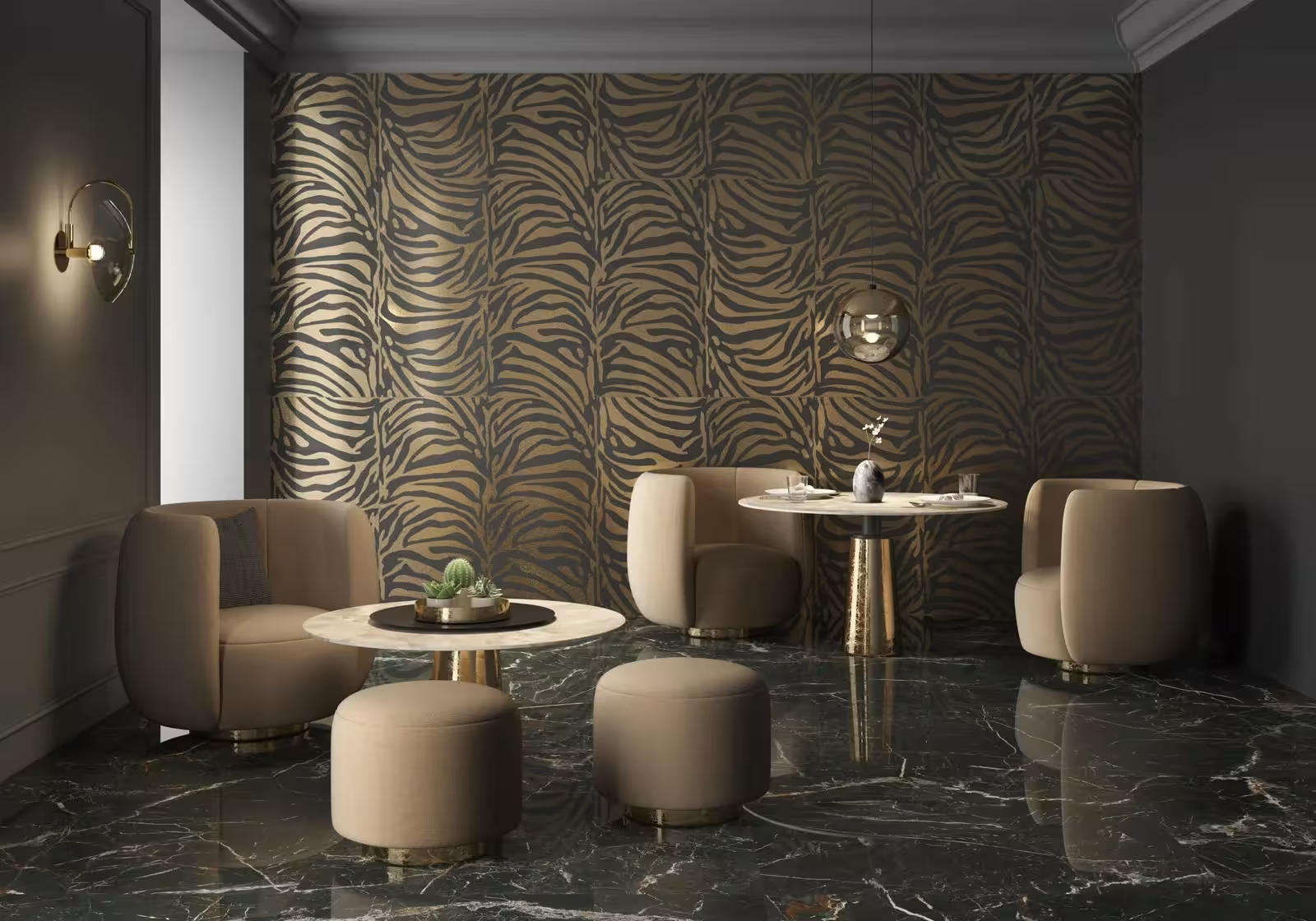
Small rooms are where bold design is most effective and lowest risk. Full dark feature ceramic floor to ceiling on all walls — ivory matte porcelain floor. Or metallic or textured ceramic for maximum drama. The small scale makes even bold choices feel considered rather than excessive.
Shower Area / Wet Room
Extend main floor tile into shower area — same tile, same level, linear drain. Shower tray zone: same tile in smaller format (30x30cm) if main floor is 60x60cm for better grip (R11). Feature ceramic on shower back wall. Waterproof substrate throughout — no compromises on installation.
Vanity Wall
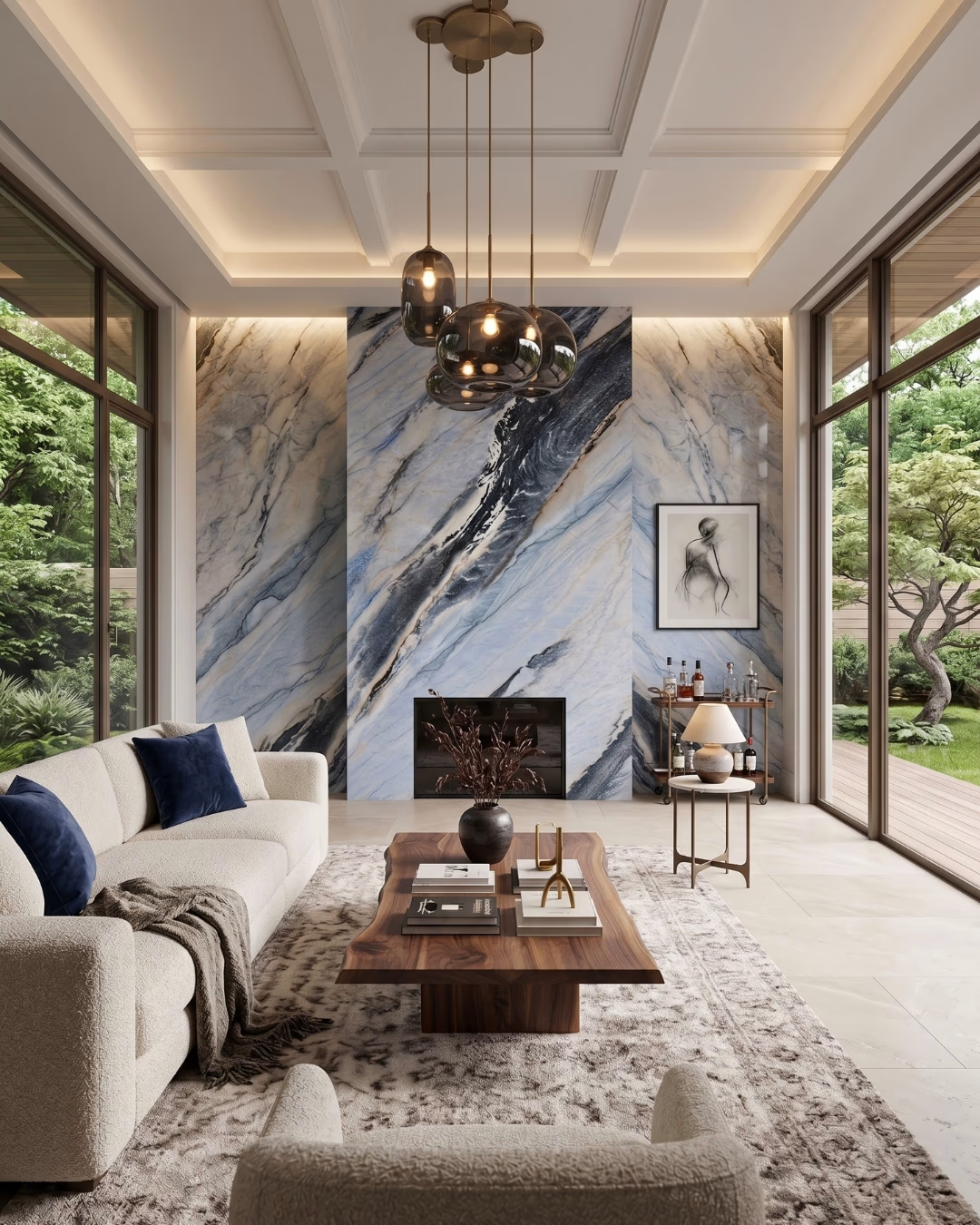
The vanity wall is the bathroom's primary design focal point — the wall you face every day at the basin. Use it for the most visually interesting tile in the design — bookmatched marble, bold colour ceramic, fluted texture, or shaped tile. The feature surface earns maximum design attention on the wall you look at most.
Shower Niche
The shower niche is a perfect opportunity for a contrasting tile without committing a whole wall. Use the same colour in a different material or finish — mosaic glass, shaped ceramic, or penny tile — as an accent within the niche only. The contrast is controlled and intentional rather than scattered.
7. Five Modern Bathroom Design Mistakes to Avoid
Mistake 1 — Polished Floor Tile
The single most dangerous bathroom tile mistake. Polished porcelain is typically R9 — not safe on any wet floor. No matter how premium it looks, it becomes a slip hazard after every shower. Always specify matte or textured R10+ for bathroom floors.
Mistake 2 — Two Feature Walls
One bold feature surface creates a focal point. Two bold feature surfaces create visual conflict — the eye does not know where to look and the room feels unresolved. Choose one surface for your statement tile. Make everything else quiet.
Mistake 3 — White Contrasting Grout
White grout on ivory or warm grey tiles looks crisp on day one and shows every mark, stain, and mildew shadow from month three onward. Match grout to tile tone — it is more forgiving to maintain and looks more intentional.
Mistake 4 — Mixing Warm and Cool
Warm grey floor tile with cool white wall tile — the two tones fight under artificial light. Warm grey walls with cool greige floor — same problem. Keep the entire palette either warm or cool. Mixing tone temperatures creates visual discomfort that no fixture choice can resolve.
Mistake 5 — Different Batches
Ordering floor and wall tiles at different times risks different production batches. Two boxes with different batch numbers — even from the same design — can have a visible colour difference. Order all tiles for a bathroom in a single transaction from one batch.
Mistake 6 — Tiles Not to Ceiling
Stopping tiles at 2.1m on a 3m ceiling leaves a painted wall section that always looks like an unfinished decision. Modern bathrooms tile all the way to the ceiling — or use a deliberate design break at a natural architectural line (a shadow gap, a lighting cove, a ceiling level change).
8. Step-by-Step: How to Design Your Modern Bathroom in Pakistan
Choose your style direction
Select one of the six modern styles above as your design brief. This gives you a colour palette, tile specification range, and fixture direction before you visit any showroom.
Measure accurately and calculate tile area
Measure floor area (length × width minus fixtures) and wall area (perimeter × height minus door, window, and vanity openings). Use the free tile wastage calculator to get box quantities including waste factor for your layout.
Visit showroom — evaluate full-scale displays
See tiles in the floor and wall display settings at Future Designz DHA Phase 4 — not from catalogue images or sample chips. Full-scale evaluation is the only way to understand how a tile reads in a real bathroom environment.
Take samples home and test in your bathroom
Take full-size tile samples home and place them in your actual bathroom under your actual lighting at different times of day. Confirm the tile tone works under your bathroom's artificial light before ordering.
Order everything from one batch
Place your complete floor and wall tile order in one transaction — same batch number, all surfaces. Add 5–10% contingency from the same batch. Verify batch numbers on delivery before installation begins.
Modern Bathroom — Quick Reference
Design Your Modern Bathroom at Our DHA Showroom
Visit Future Designz in DHA Phase 4, Lahore — six modern bathroom design styles on full display, imported tile collections from Italy and Spain, free quantity estimation, and a design consultation that helps you resolve floor, wall, and feature tile in a single visit.
Book a Free Design ConsultationFrequently Asked Questions
What tiles are best for a modern bathroom in Pakistan?
Large-format imported porcelain in matte finish (R10+) on the floor and lappato or satin finish on the walls. The most popular modern bathroom tile in Pakistan's premium residential market is warm greige or ivory Calacatta marble-effect 60x120cm porcelain — matte on the floor, lappato on the walls, with matching 1–2mm grout throughout. The key characteristics of a modern tile specification are: large format to minimise grout lines, matching grout to match the tile tone, and one tile family (same colour, two finishes) across all surfaces.
What is the difference between lappato and matte tile for bathrooms?
Matte finish has no reflectivity — it provides the best grip on bathroom floors (typically R10+ rated) and hides footprints and smudges. Lappato finish is a semi-polish — it has a warm, tactile sheen that catches artificial light beautifully and is ideal for bathroom walls and feature surfaces. In a modern bathroom, the standard combination is matte on floors for safety and lappato on walls for warmth and light-reflection. Never use lappato finish on a wet bathroom floor — it is not safe.
Should I tile bathroom walls floor to ceiling?
Yes — in modern bathroom design, tiling all the way to the ceiling is the correct approach. Stopping tiles at 2.1m on a 2.8m or 3m ceiling leaves a painted wall section that always looks like an unfinished design decision. Full-height tiling creates the spatial clarity and visual resolution that defines modern bathroom design. It also eliminates a horizontal line that visually cuts the room and makes ceilings feel lower.
How many feature walls should a modern bathroom have?
One. A single feature surface — the shower back wall or the vanity wall — creates a focal point. Two or more feature surfaces create visual conflict. The rest of the bathroom should use a quieter coordinating tile that supports rather than competes with the feature surface. The one-feature-surface rule applies across all six modern bathroom styles in this guide.
What grout colour should I use in a modern bathroom?
Match grout colour to tile tone as precisely as possible — the goal is for grout to disappear into the tile surface. In a modern bathroom, visible grout lines fragment what should read as a continuous material surface. Use a 1–2mm joint with matching grout throughout. The only exception is a deliberate coloured grout statement on a feature surface (such as metro tile with charcoal grout) where the grout pattern is part of the design intent.
Where can I find modern bathroom tiles in Lahore?
Future Designz showroom in DHA Phase 4, Lahore — imported tile collections from Infinity (Italy) and Dune, Pamesa, Vives, and Etile (all Spain) displayed in modern bathroom settings. All six design styles in this guide are available to view at full scale. Free tile quantity estimation and design consultation available on request, with no obligation to purchase.
