
How to Choose Tile Colour for a Small Living Room
Light tile colours, neutral palettes, and open-space flooring principles that make small living rooms feel significantly larger — with practical guidance for Lahore homes.
Tile colour is one of the most powerful tools in a small room — and one of the most misunderstood. The right colour on a floor can make a compact living room feel open, airy, and considered. The wrong colour can make the same room feel darker, smaller, and closed-in — regardless of how well the furniture is arranged or how much natural light the room receives. This guide explains the principles behind tile colour selection for small living rooms and gives you a clear framework for choosing the right palette for your specific space.
What's Inside
- Why Tile Colour Affects Perceived Room Size
- How Your Room's Light Changes Everything
- 6 Tile Colour Palettes for Small Living Rooms
- The Neutral Tile Palette — Why It Works Best
- Colour + Format: The Combination That Matters
- 6 Colour Rules for Small Living Rooms
- Do's and Don'ts for Small Living Room Tile Colour
- Etile Collections for Small Living Rooms
- Frequently Asked Questions
1. Why Tile Colour Affects Perceived Room Size
The human eye reads light-coloured surfaces as receding and dark surfaces as advancing. On a floor — the largest horizontal surface in any room — this effect is amplified significantly. A light-coloured floor tile reflects ambient light upward, brightening the lower half of the room and creating the perception of a higher, more open space. A dark floor absorbs light, draws the eye downward, and makes the room feel more enclosed.
Room Feels Smaller
Floor absorbs light, boundaries advance, ceiling reads lower, space contracts
Room Feels Larger
Floor reflects light upward, boundaries recede, ceiling reads higher, space expands
In a small living room, the floor is typically the largest single surface visible from any seating position. The colour choice on that surface has more impact on perceived room size than wall colour, furniture arrangement, or lighting fixtures combined.
2. How Your Room's Light Changes Everything
East or South-Facing Room — Good Natural Light
Rooms with strong direct natural light can handle a slightly warmer or mid-tone neutral without feeling dark. A warm cream, greige, or soft sandstone tile reads beautifully in morning and afternoon sunlight. Avoid stark pure white in very bright rooms — it can read as washed-out and clinical under intense direct light.
North or West-Facing Room — Limited Natural Light
Low-light rooms need tile colours that work hard to compensate. Stick to light, warm-toned neutrals — warm white, ivory, or pale greige. Cool greys and blue-toned tiles make already-dim rooms feel colder and smaller. The tile's job in a north-facing small living room is to borrow and reflect whatever light is available.
3. Six Tile Colour Palettes for Small Living Rooms
Warm Ivory & Cream
The safest and most consistently successful colour for small living rooms. Warm ivory reflects light gently without the harshness of pure white, and pairs with almost any furniture colour or wall tone.
Warm Greige (Grey-Beige)
Greige is the most versatile neutral in contemporary Pakistani interiors — it bridges cool and warm tones, reads differently under different lighting, and does not date. Works with white, navy, and wood tones equally.
Light Cool Grey
Cool grey works in small living rooms that receive strong natural light. Avoid in low-light north-facing rooms where it becomes cold and flat.
Soft Sandstone & Wheat
Warm sandy tones work particularly well in Pakistani living rooms where cabinetry, sofas, and wall colours tend toward warm wood and cream tones. Continuity of warm palette across floor and furnishings makes rooms read larger.
Off-White Marble Effect
A marble-effect porcelain in off-white or Calacatta tones combines the spatial benefit of a light floor with the visual richness of a veined surface. The best single option when budget allows for a premium imported tile.
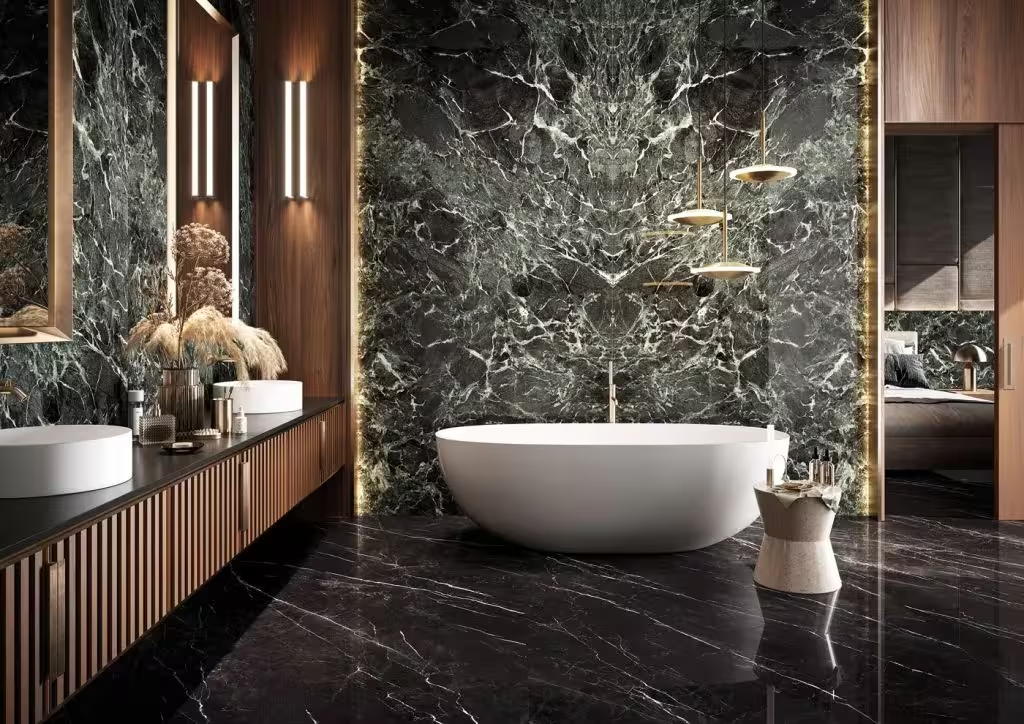
Dark Charcoal (Use with Caution)
Dark tiles make small rooms feel smaller — this is a near-universal rule. The one exception is a deliberate design choice to create an intimate, moody atmosphere in a formal sitting room rather than a family space.
4. The Neutral Tile Palette — Why It Works Best
A neutral tile palette does not mean boring. It means choosing a tile colour that does not compete with the room's other elements and instead provides a resolved base from which everything else can read clearly. In a small living room, visual competition between surfaces makes the room feel busier and smaller. Neutrality on the floor gives everything above it space to breathe.
Warm White
Most reflective — maximum light return
Ivory
Warm, soft — works in any light
Greige
Most versatile — pairs with everything
Sand
Traditional warmth — timeless
Cool Grey
Modern — needs good natural light
5. Colour + Format: The Combination That Matters
Tile colour and tile size work together — not independently. For small living rooms, the optimal combination is a light neutral colour in a large format. This delivers both the spatial benefit of light reflection and the visual continuity of reduced grout lines simultaneously.
| Colour + Format Combination | Effect on Small Room | Verdict |
|---|---|---|
| Light neutral + large format (60x120cm) | Maximum spatial expansion — light floor + minimal grout lines | Best possible combination |
| Light neutral + medium format (60x60cm) | Good spatial effect — light floor with moderate grout lines | Very good — practical choice |
| Light neutral + small format (30x30cm) | Light colour helps but grout grid creates visual busyness | Acceptable — not optimal |
| Dark colour + large format | Format helps but dark colour still reduces perceived size | Not recommended for small rooms |
| Dark colour + small format | Double negative — dark colour and busy grout grid both shrink room | Avoid in small living rooms |
| Warm neutral + marble veining | Adds visual richness without sacrificing spatial benefit of light tone | Premium choice — best of both |
6. Six Colour Rules for Small Living Rooms
Go Lighter Than You Think
The instinct is to choose a tile that feels safe and mid-toned. In a small room, go one shade lighter than your first instinct. The difference between ivory and warm white reads far more dramatically on a full floor than on a 10x10cm sample.
Match Tile Tone to Wall Colour
When the floor tile and walls share a similar tonal value — both light, both warm — the boundary between floor and wall blurs slightly, and the room reads as a single resolved space rather than separate surfaces competing for attention.
Keep Grout Close to Tile Colour
A contrasting grout colour on a light tile makes the tile grid visible and adds visual texture to the floor — the opposite of what small rooms need. Match grout to tile tone as closely as possible to maintain a seamless, continuous effect.
Warm Undertones Beat Cool
Pakistan's interior colour culture — walls, furniture, textiles — leans warm. A tile with warm undertones (ivory, greige, sandstone) integrates more naturally with this palette than a cool grey or blue-white, which can look out of place regardless of how good it looks in isolation.
Test the Sample on the Actual Floor
Place the full tile sample flat on your floor — not on a table or held up against a wall. The angle of light hitting a horizontal surface is completely different from a vertical one. A tile in a showroom looks nothing like the same tile on your floor under your ceiling height.
One Floor Colour Across the Ground Floor
If the living room connects to a hallway or dining area, use the same tile colour throughout. Visual breaks at doorways create artificial boundaries that make each space read as smaller. Continuity makes the entire ground floor feel like one large space.
7. Do's and Don'ts for Small Living Room Tile Colour
✓ Do This
- Choose light neutral tones — warm white, ivory, greige, or soft sandstone
- Use large-format tile in a light colour for maximum spatial effect
- Match grout colour to tile tone to minimise visible grout lines
- Continue the same tile colour into adjacent hallways and dining areas
- Test samples horizontally on your actual floor under your room's lighting
- Choose a matte or lappato finish — gloss creates reflections that feel busy in small spaces
- Let the floor recede — keep pattern and colour drama on walls and furniture instead
✗ Avoid This
- Dark charcoal or black tiles — they shrink small rooms consistently
- High-contrast grout on light tiles — creates a visible grid that fragments the floor
- Cool grey tiles in rooms with limited natural light
- Small format tiles with heavy grout patterns on small room floors
- Choosing tile colour from a small sample under showroom lighting only
- Different tile colours in the living room and adjacent hallway
- Bold pattern tiles on floors — reserve pattern for feature walls or accent areas
8. Etile Collections for Small Living Rooms
Etile is a Spanish porcelain manufacturer whose collections are particularly well suited to small living room floors — with an extensive range of light neutral and warm-toned matte porcelain in large formats that deliver exactly the spatial performance small rooms need.
- Large-format light neutral porcelain in 60x60cm, 60x120cm, and 80x80cm formats
- Warm ivory and greige collections in matte and lappato finishes — optimal for small living rooms
- Physical samples available to take home and test under your room's actual lighting
- Grout colour matching service available in showroom
- Full technical data sheets on request — absorption rating, slip resistance, PEI rating
Find the Right Colour in Person
Visit the Future Designz showroom in DHA Phase 4, Lahore and compare our full range of light neutral and warm-toned porcelain collections — with physical samples available to take home and test under your own room's lighting before deciding.
Book a Free ConsultationFrequently Asked Questions
How do I choose tile colour for a small living room?
Choose light neutral tones — warm white, ivory, greige, or soft sandstone — in a large format with grout that matches the tile colour. Light tiles reflect ambient light upward, making rooms feel taller and more open. Always test a physical sample under your room's actual lighting before deciding.
What tile colour makes a small living room look bigger?
Light, warm neutral colours — particularly warm white, ivory, and greige — consistently make small living rooms feel larger. These tones reflect ambient light back into the room and cause the floor to visually recede. The effect is strongest when the same tile continues into adjacent hallways without interruption.
Should I use light or dark tiles for a small living room?
Light tiles almost always work better in small living rooms. Dark tiles absorb light and cause the floor to visually advance toward the viewer, making the room feel smaller and more enclosed. The only exception is a deliberate design choice to create a moody, intimate atmosphere where perceived size is not the priority.
What is a neutral tile palette and why does it work for small rooms?
A neutral tile palette uses light, non-competing colours — warm whites, ivory, greige, sandstone — that do not draw attention to the floor itself. In small rooms, visual competition between surfaces makes the space feel busier and smaller. A neutral floor gives furniture, walls, and ceiling space to read clearly.
Does tile laying direction affect how big a small room looks?
Yes. Rectangular tiles laid lengthwise in the direction of the room's longest axis visually elongate the space. Square tiles in a straight grid have a neutral directional effect. Diagonal layouts can make a room feel wider but add more cut pieces and installation complexity.
Where can I find light neutral tile collections in Lahore?
Future Designz showroom in DHA Phase 4, Lahore carries imported light neutral porcelain from Etile, Pamesa, Infinity, and Vives — in large formats and warm neutral colour ranges suited to small and open-plan living rooms. Physical samples are available to take home and view under your own conditions.
